SANTREX · SYSTEM DEVELOPMENT & OEM INTEGRATION
In Development
Laser technology and machine vision. Integrated.
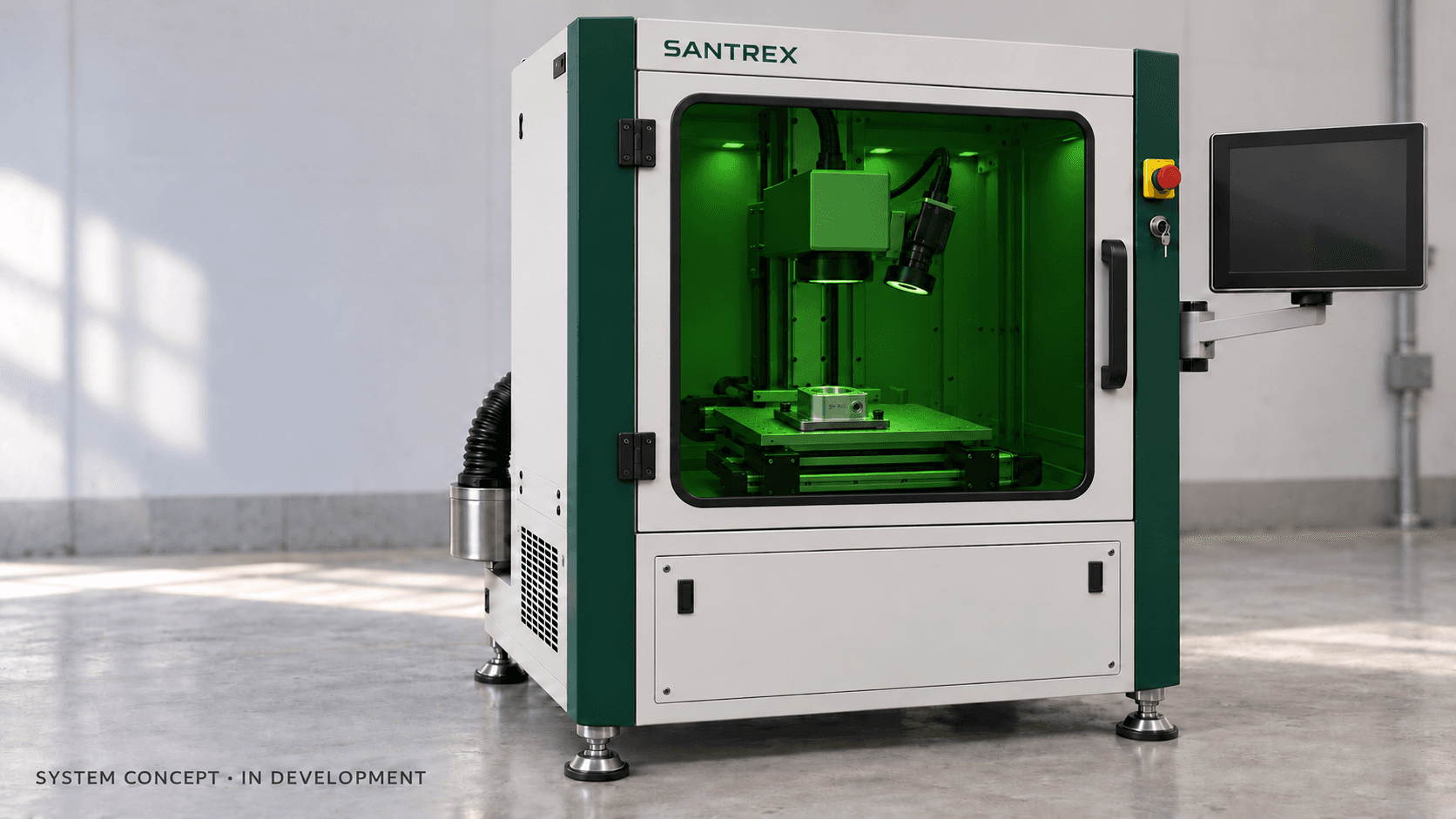
Under the SANTREX brand, Fasterpoly GmbH is developing modular systems for industrial laser marking and optical part inspection. Our focus is the integration of mechanical design, positioning, laser control and our own application software.
We are working on a platform that positions parts, inspects defined features, applies identification and maintains traceable process records. Optical inspection is also intended to operate independently of laser processing.
Project stage: First-platform development and component selection.
Mechanical design · System integration · Machine vision · Application software
Our integration focus
Mechanical design and positioning
We develop the mechanical system architecture around the part, its fixture and the intended process. This includes workpiece carriers, fixtures, linear positioning axes and arrangements for cylindrical parts.
The objective is repeatable positioning that also accommodates access, part handling and future extensions.
Laser technology and optics
We are evaluating industrial laser sources, galvo scanners and matched F-theta optics for our system platform. The optical marking field and mechanical positioning range are considered together.
Our integration work addresses the complete processing chain: source, beam delivery, scanner, focus, workholding, calibration and process parameters.
Machine vision and software
We develop application software to connect job data, part position, marking content and inspection results. Documented interfaces and official manufacturer SDKs are central to a maintainable integration.
Our aim is practical value for the operator: less manual data entry, understandable workflows and a clear relationship between each part, its identification and its records.
Application priorities
Industrial marking and engraving
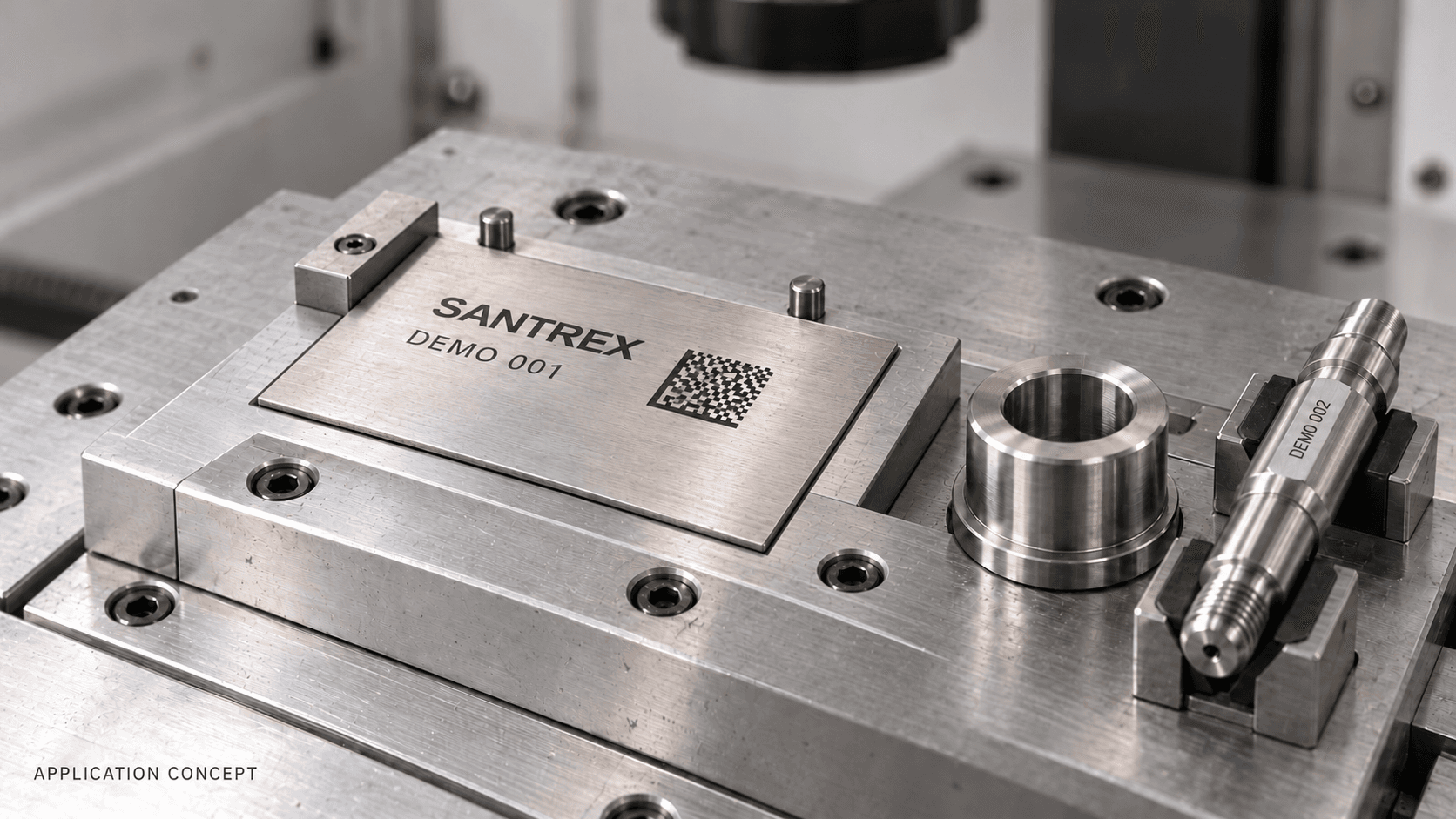
The first platform is being designed around metal-part identification, with applications including:
- •Serial numbers, batch references and part identification.
- •Data Matrix and QR codes.
- •Logos, readable text and technical markings.
- •Tool identification, nameplates and precision components.
- •Indexed circumferential marking of cylindrical parts.
Material, surface condition, available marking area, durability and quantity are evaluated for each application. Process release is based on suitable samples and agreed acceptance criteria.
Camera-based positioning
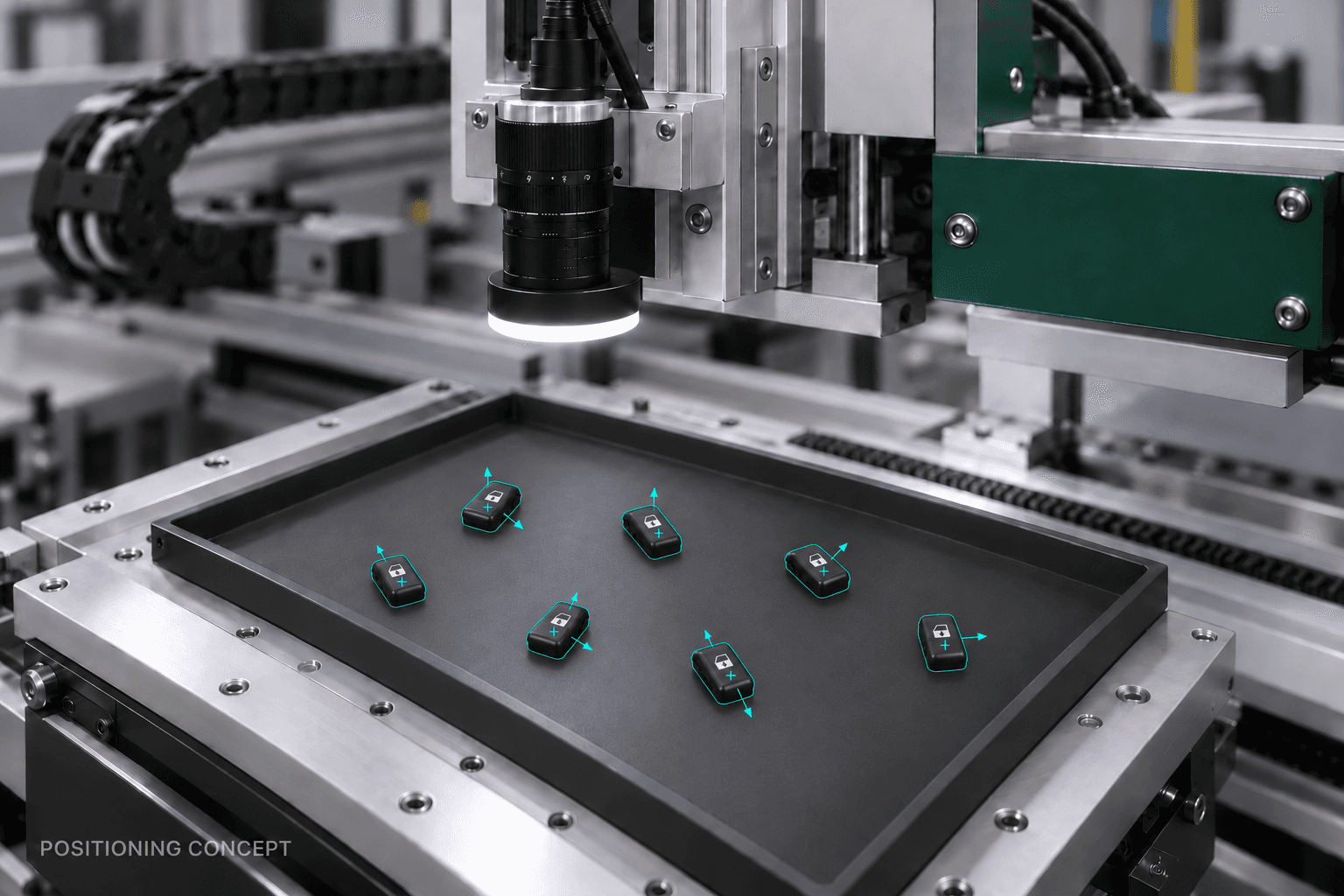
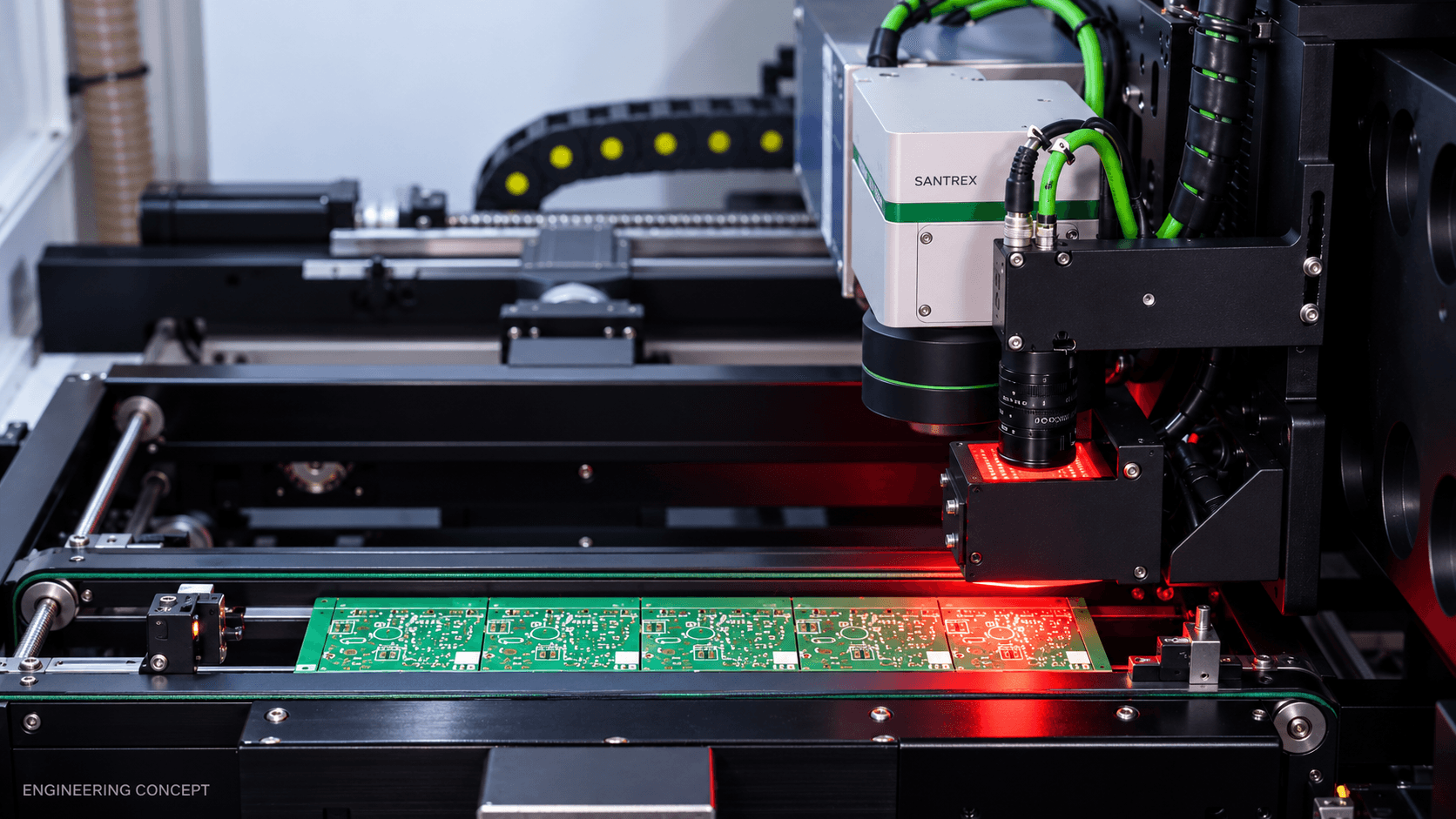
The camera system is intended to identify the position of a part or defined reference features and transfer the calculated position data to the processing application.
Our initial development approach uses image acquisition while the relevant axes are stationary, followed by positioning, marking and subsequent checks. The aim is easier setup for differing part geometries.
Independent optical part inspection
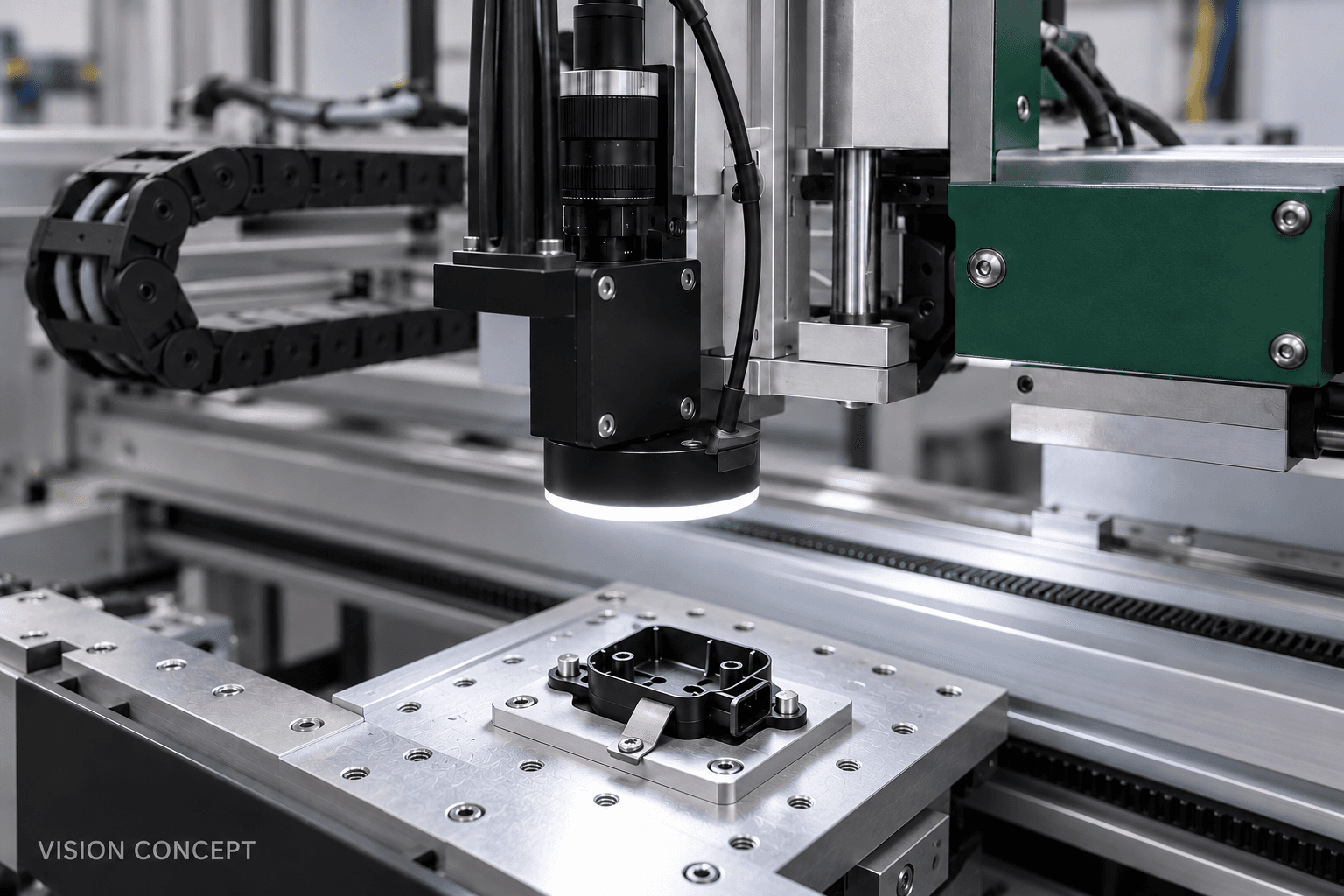
Inspection is being developed as a separate function of the platform. Potential tasks are evaluated using representative parts and agreed inspection requirements:
- •Presence, completeness and orientation.
- •Contour and positional deviations within a defined inspection setup.
- •Comparison of text and readable code content.
- •Detection of agreed visible surface features or defect classes.
- •Result documentation linked to images and part identification.
Lighting, camera, optics and analysis are selected for the specific task. Depending on the application, rule-based machine vision or AI-assisted methods may be appropriate.
Combined workflows
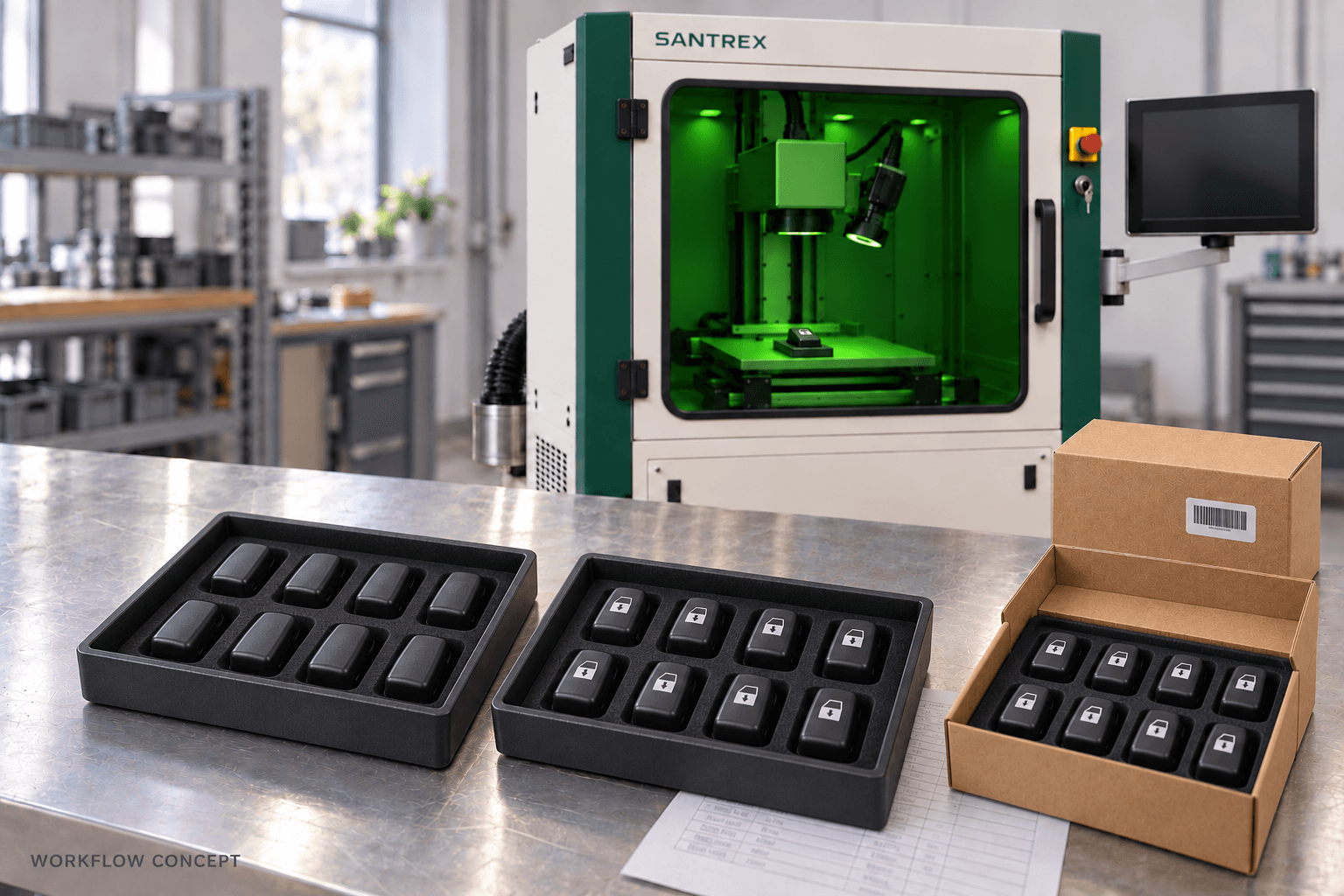
A potential workflow combines incoming checks, position detection, laser marking and post-process inspection. Assembly checks, sorting and batch-based packaging may be considered in later development stages.
Current reference architecture — planning basis
- Laser source
- Pulsed 1064 nm MOPA fiber laser, initially using 60 W as the reference
- Scanning
- Digital 2D galvo, approximately 10 mm aperture
- Optics
- Interchangeable F-theta lenses; target fields approximately 70 × 70, 110 × 110 and 200 × 200 mm
- Positioning
- Mechanical X/Y axes, motorized Z positioning and a rotary axis
- Processing coverage
- Initial target 600 × 600 mm; larger variants up to approximately 1000 × 600 mm are being evaluated according to the mechanical architecture
- Initial processing
- Position, stop and mark; indexed circumferential marking
- Machine vision
- Local part imaging, position detection and independent inspection functions
- Software integration
- Our own application using documented controller and camera interfaces
- Construction
- Enclosed workstation with integrated electrical and safety-system design
These parameters describe the development project. Final configuration, usable space, accuracy and processing performance will be established through component selection, calibration and application testing.
Application software and traceable workflows
A machine should preserve the relationship between the job, the part, the processing instructions and the result.
Our software development therefore addresses:
- •Import and assignment of job and identification data.
- •Controlled use of text, serial numbers and code content.
- •Transfer of position data calculated by the vision application.
- •Independent inspection sequences and combined processing workflows.
- •Image records, result data and structured reports.
- •Reuse of approved part and process configurations.
These functions are being developed in stages and validated on the first system platform.
OEM cooperation and technology partners
SANTREX is developing its own integrated system solutions. The first platform will support integration, application validation and the establishment of industrial services. Following successful validation, it is intended to provide a basis for further application-specific customer systems.
We are seeking long-term relationships with manufacturers of industrial components, particularly laser sources, galvo scanners, optics, controllers, positioning systems and machine-vision equipment.
Our priorities include:
- •Clearly specified components with identifiable product revisions.
- •Documented electrical, mechanical and software interfaces.
- •Official SDKs and clear licensing terms.
- •Technical support for integration and calibration.
- •Spare-parts availability and a dependable basis for future system variants.
Our own engineering focus is mechanical design, system integration, application software, inspection and customer-specific system configuration.
Discuss technical cooperationFrom the part to an agreed process
- 1
Understand the requirement
Material, geometry, marking or inspection task, quantity and intended workflow.
- 2
Evaluate feasibility
Representative samples, drawings, images and a suitable processing setup.
- 3
Develop the solution
Match optics, fixtures, positioning, software and inspection.
- 4
Validate the result
Agreed features, documented trials and traceable approval.
- 5
Plan extensions
Account for repeat applications and future additions.
About SANTREX
SANTREX brings together Fasterpoly GmbH's development activities in industrial laser and machine-vision systems.
The project combines practical experience in mechanical engineering, manufacturing, CNC machining, fixtures, assembly and industrial quality inspection with application-software development.
The contact for development and technical cooperation is Alireza Saneifar, mechanical engineer.
Contact
Let us discuss your application or component.
For part applications, technical cooperation and OEM components:
Alireza Saneifar
SANTREX | Fasterpoly GmbH
Correspondence address: Schorlemerstr. 34, 41464 Neuss, Germany
Email: info@santrex.de
Phone: +49 176 64947110
Website: santrex.de/en